Brian WashburnLEARNING & DEVELOPMENT

STRATEGY. PEOPLE. PERFORMANCE.

Build capability.
Make learning
matter.

I’m Brian Washburn, an L&D leader who turns complex work into practical learning. I build learning functions, develop facilitators, and design technical training that supports operational performance, including in regulated environments.

Explore my work

Learning Leader | Master Trainer | Speaker | Author | Magician

Brian Washburn smiling
Creative thinking.
Practical execution.
20+ yearsin learning & development
35+ clientsacross four continents
2 booksand 8 published articles
on purposeful learning design

SELECTED WORK

Different challenges.
Purposeful solutions.

Case studies that provide insights on how I diagnose needs, bring people together, and build solutions that connect learning to real work:

FUNCTION BUILDING / QUALITY / ONBOARDING
1,300employee hours saved annually
Reported in TD magazine, June 2017

01 / SIGHTLIFE

Building capability, quality, and shared ownership

As SightLife, the world’s largest eye bank (as in cornea transplants), expanded through acquisitions, employees needed to understand how their teams connected to one another and to the mission of eliminating corneal blindness.

I grew a network of learning champions, moved into a newly created organization-wide L&D director role, and led a small team with dotted-line partnerships across departments. My work connected onboarding, technical training, and quality assurance to the realities of eye banking.

I improved QA onboarding and partnered with the VP of Quality Assurance on training supporting SOP adoption and continuous audit readiness at eye banks across Asia.

Read the case study

Technical training and audit readiness

In partnership with the VP of Quality Assurance, I developed training to support standard operating procedure (SOP) adoption and continuous audit readiness across eye banks in Asia.

This work brought adult learning and instructional design into a highly technical, regulated environment. The focus was helping people understand and apply procedures in their day-to-day work, with learning that supported quality and readiness beyond a single training event.

The onboarding challenge

A three-day orientation flooded new hires with disconnected departmental presentations. Some managers stopped sending staff because they didn’t see the value, and they needed their new hires to begin working in their functional areas immediately.

The approach

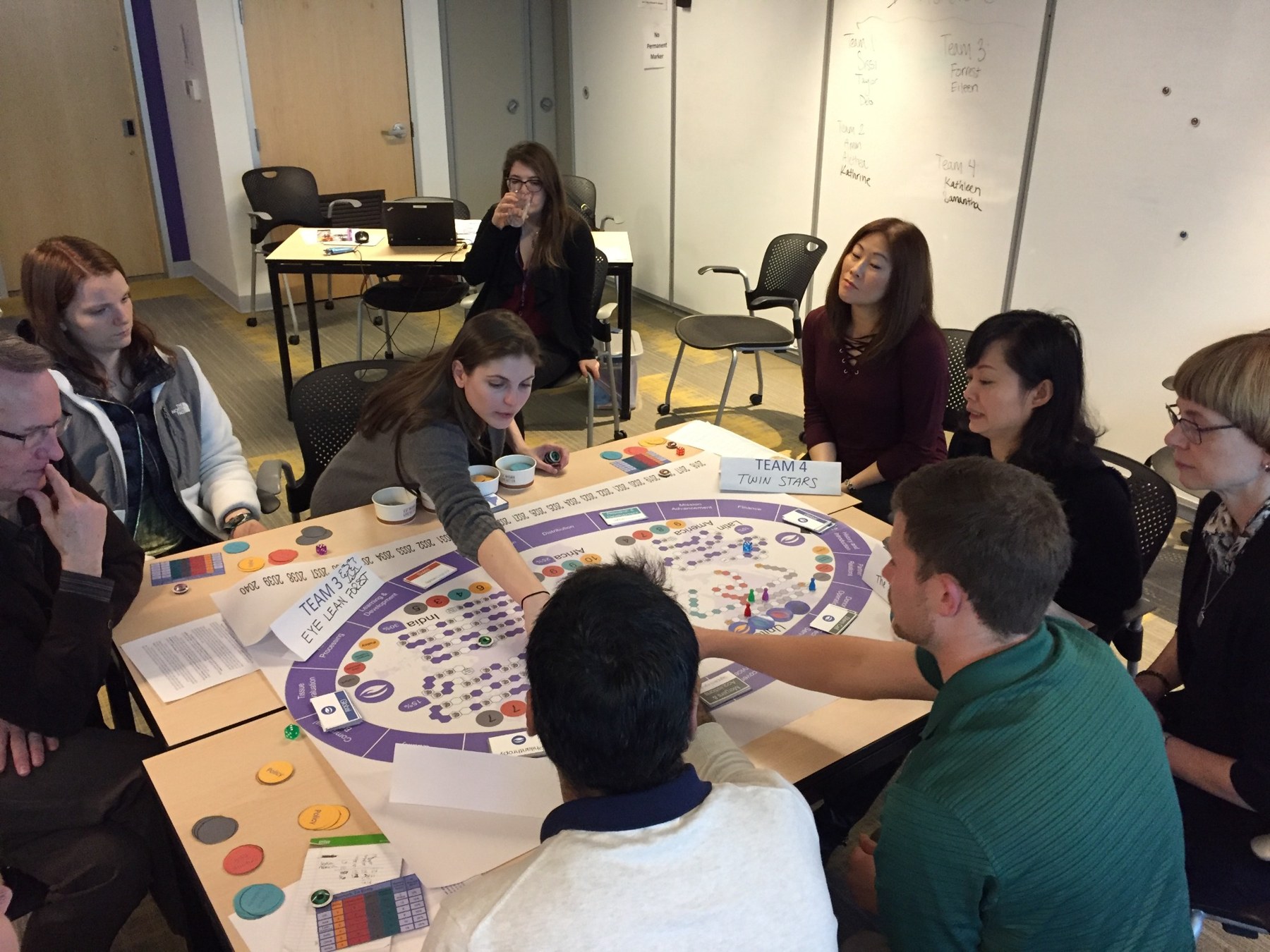
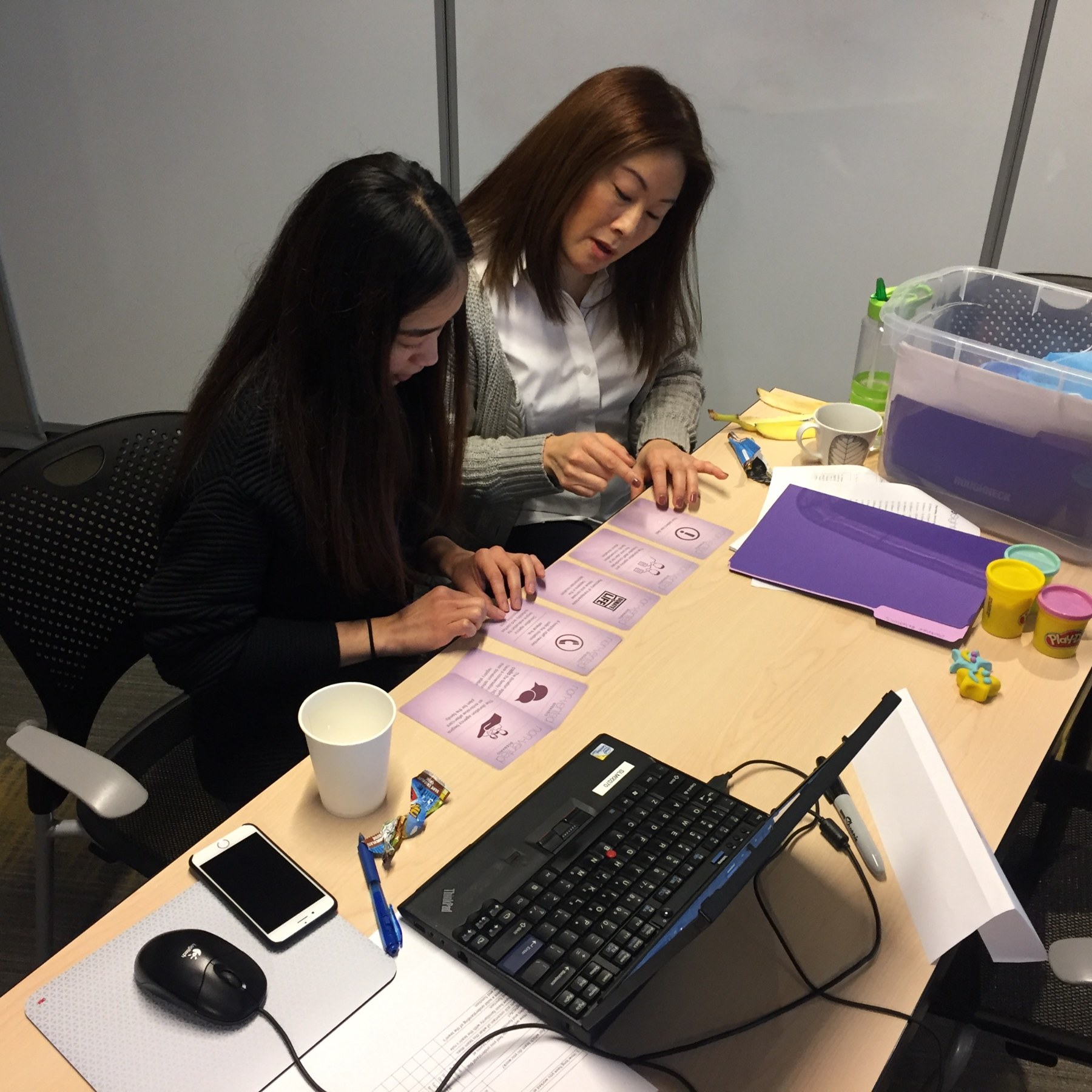
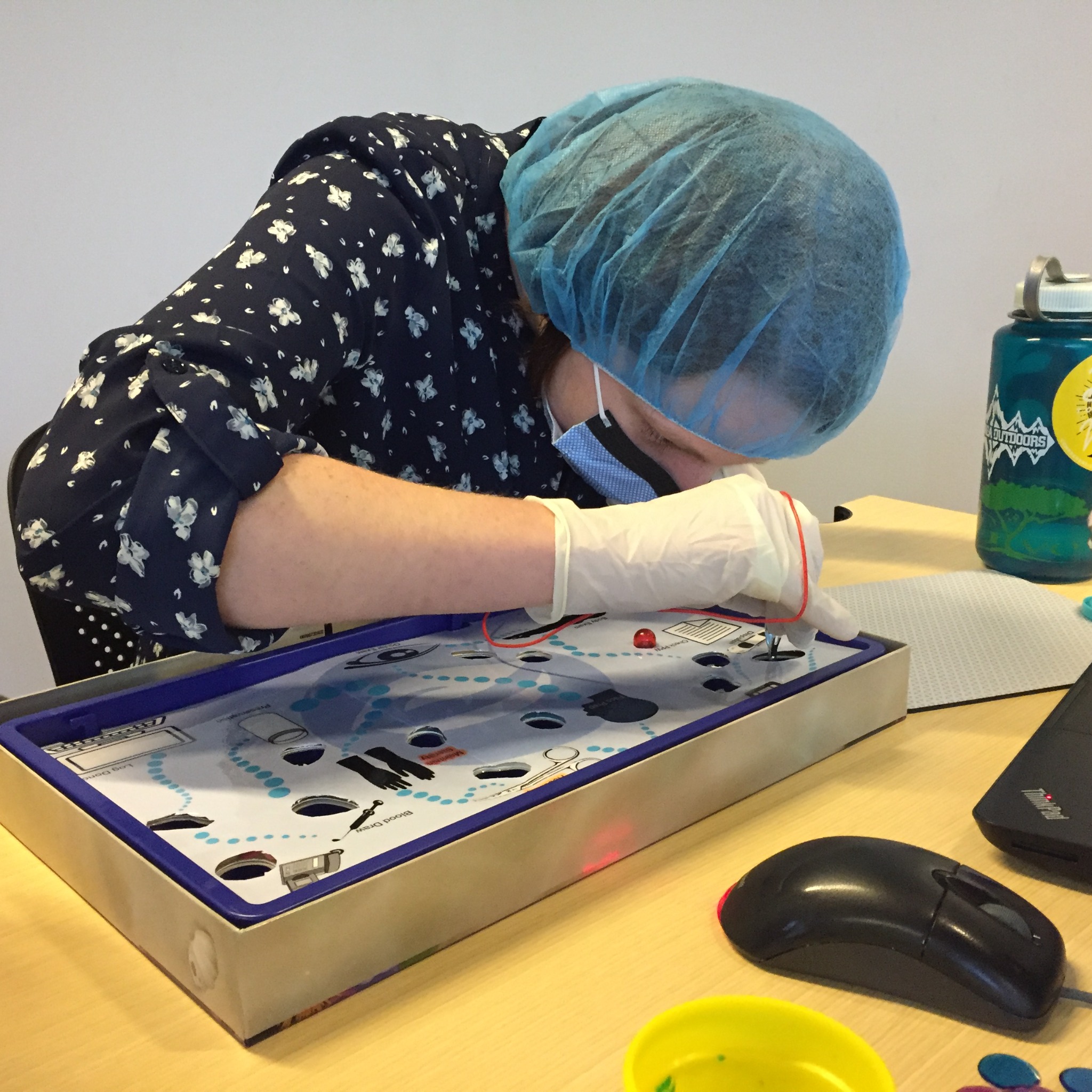
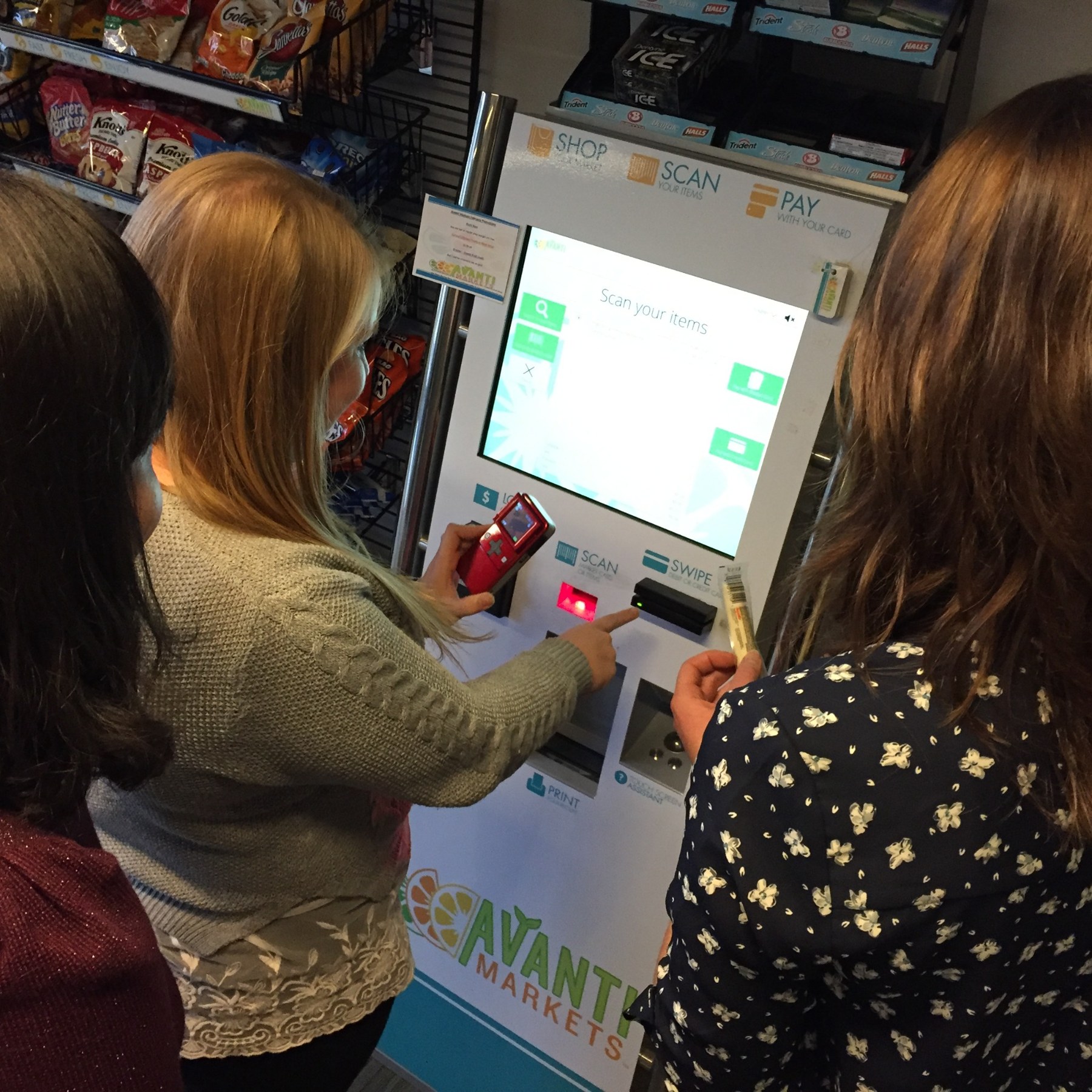
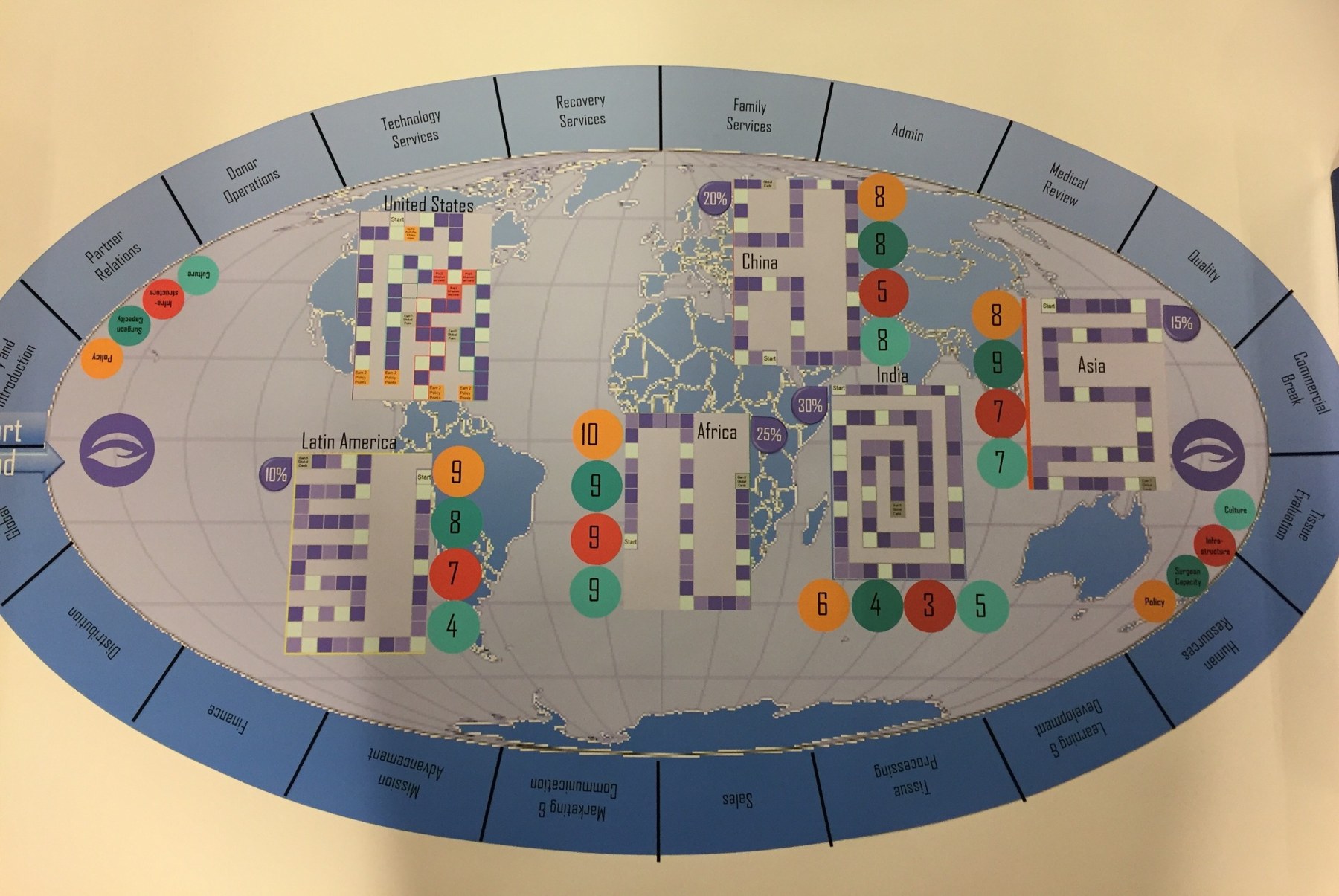
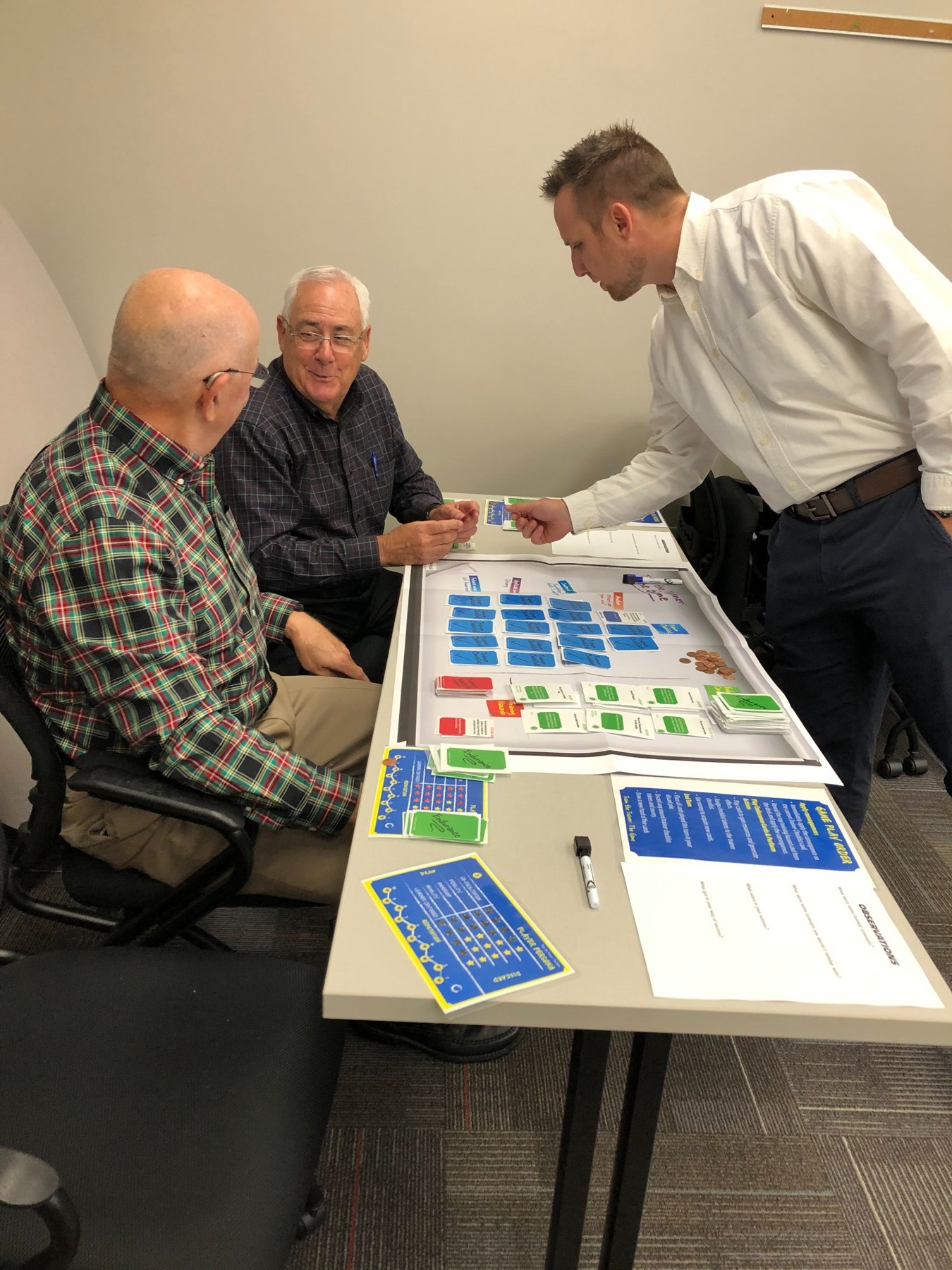
I led a team in replacing 3 days of non-stop lecture with a series of games and challenges designed to simulate the work of each department, augmented by short videos, Q&A, and culminating in a mission-centered strategy game to connect new employees to the mission and vision of the organization.

Adoption and evidence

Participants returned to their teams and shared their experiences. Hiring managers began sending employees and wanted to contribute as presenters and Q&A partners.

The initial pilot included ten participants and nine evaluation responses: NPS was 78, and respondents reported familiarity with every department. These were early, self-reported measures. Eventually I published the results of this initiative in TD magazine. Among those results we calculated that 1,300 employee hours were saved annually as a result of this overhauled new employee orientation program.
FACILITATOR DEVELOPMENT / TECHNICAL & SAFETY TRAINING

QUALIFIED TRAINER PROGRAM

Technical expertise.
Consistent delivery.

267qualified trainers
over two years
98%pass rate

02 / PROPANE EDUCATION AND RESEARCH COUNCIL

Developing qualified trainers for technical and safety learning

Technical expertise matters. So does the ability to help someone else understand and apply it. My Qualified Trainer program for the Propane Education and Research Council focused on consistent delivery of technical and safety training.

Over two years, the program produced 267 qualified trainers with a 98% pass rate.

Read the case study

The need

Technical and safety training calls for facilitators who can make complex material clear while keeping delivery consistent. Developing trainer capability is part of supporting the quality of the learning itself.

The focus

I developed the Qualified Trainer program to strengthen that capability, connecting facilitator development to the practical demands of technical and safety instruction.

The results

The program qualified 267 trainers over two years, with a 98% pass rate. The focus remained on preparing trainers to deliver technical and safety learning consistently.

GAME DESIGN / VIRTUAL SCALE

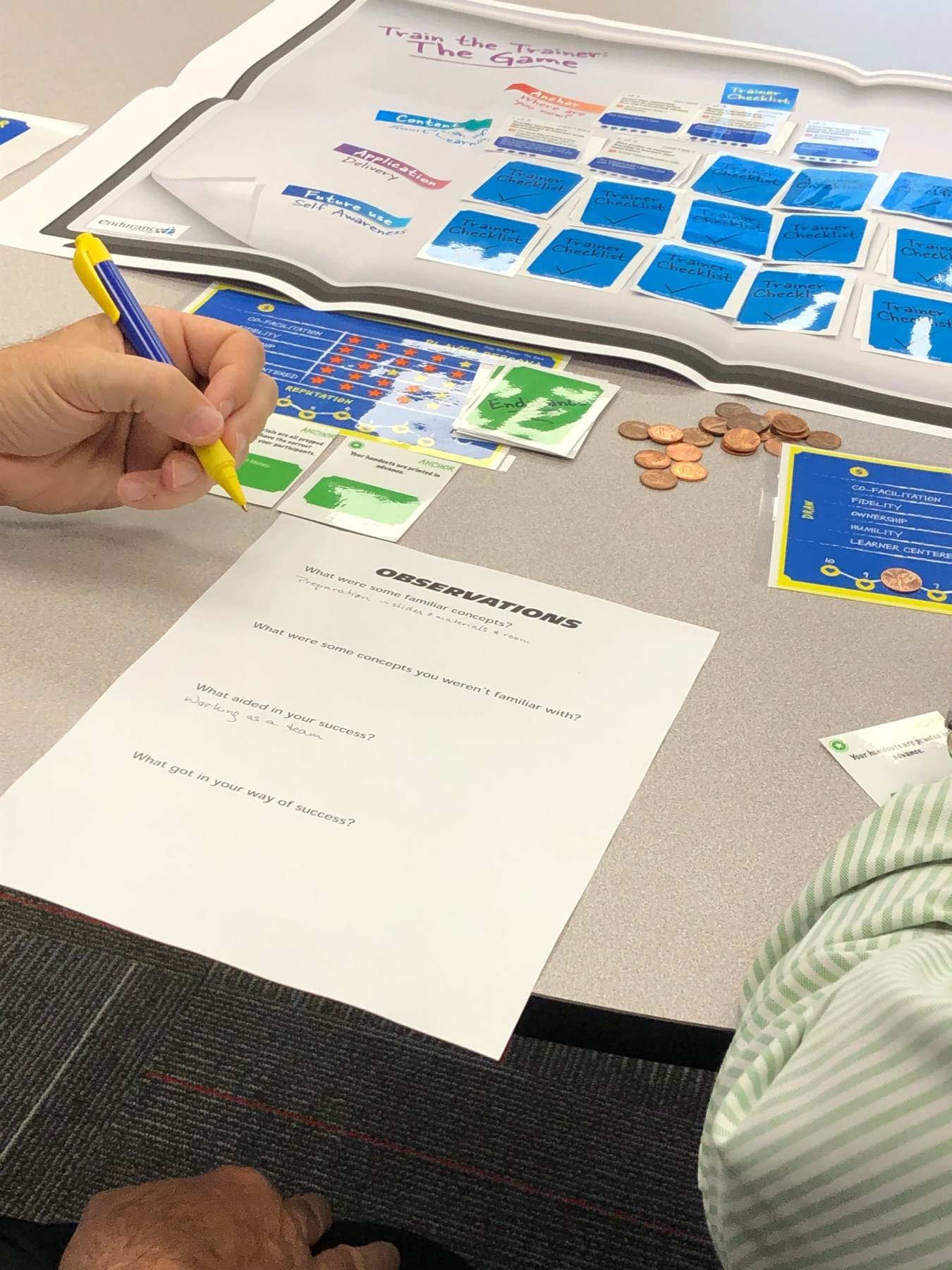
03 / TRAIN-THE-TRAINER: THE GAME

Cooperative play. Consequential decisions.

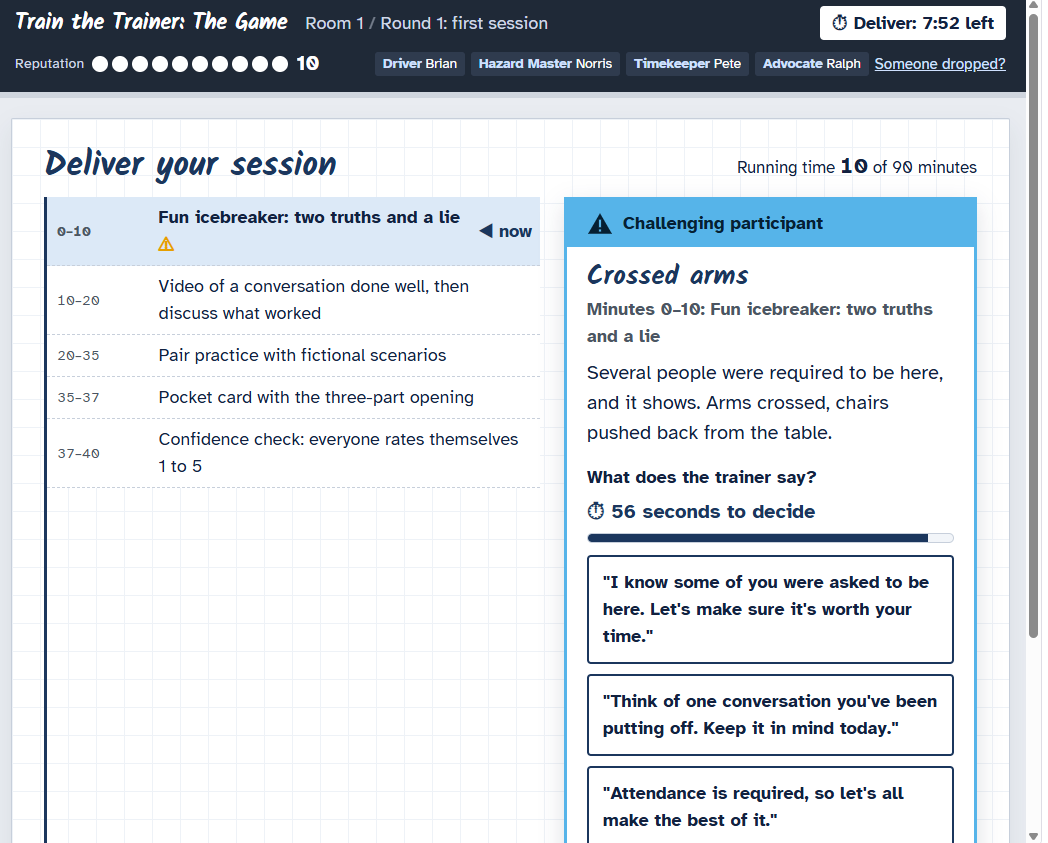
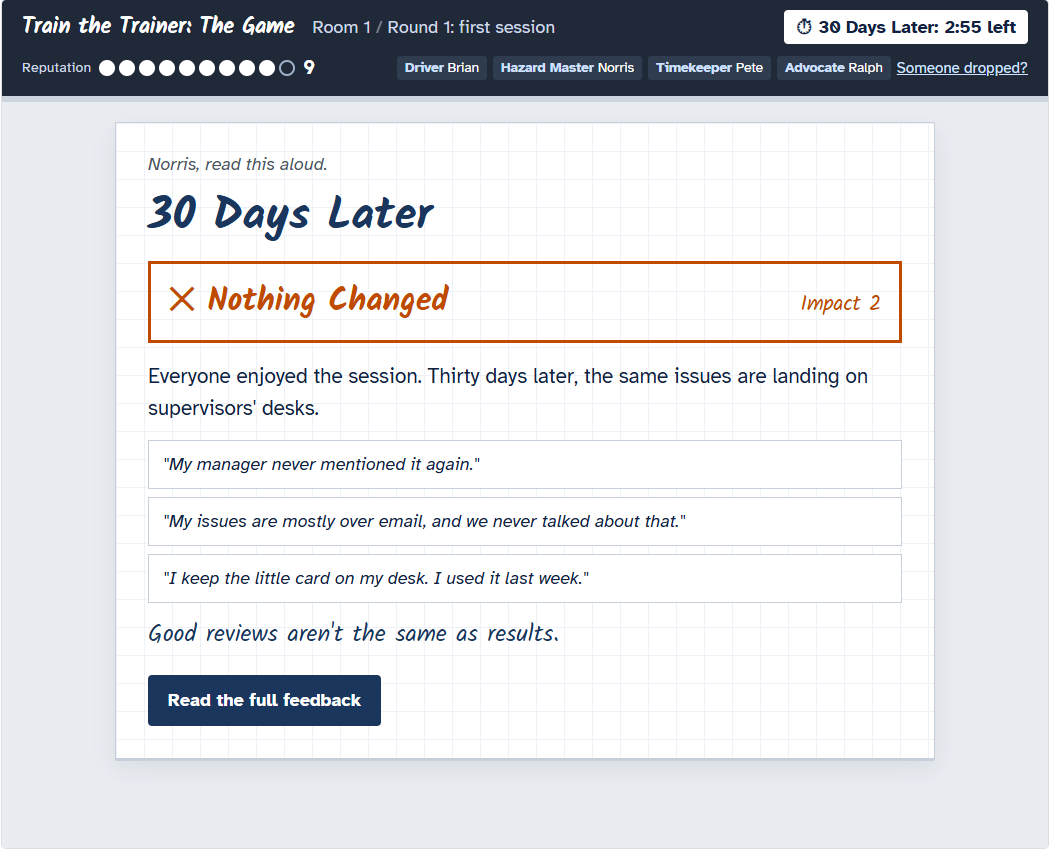
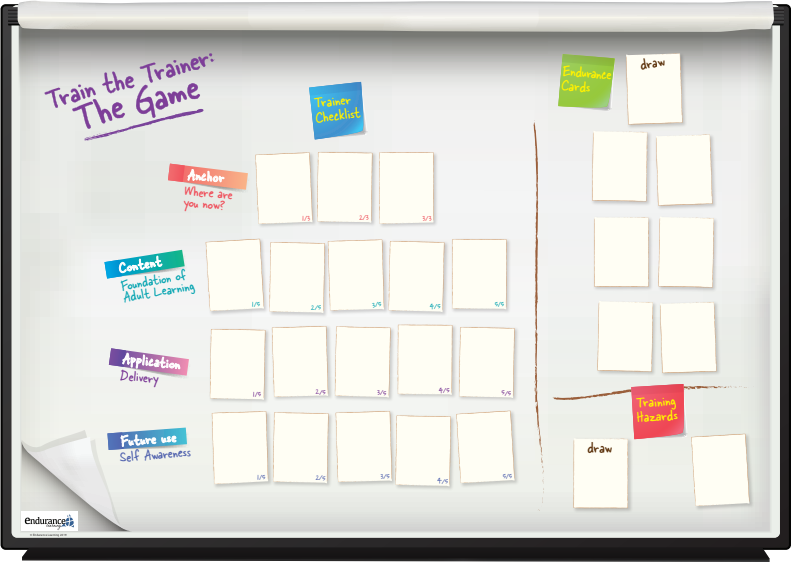
I created a deck-building game for a major global tire manufacturer whose trainers had already attended other train-the-trainer programs. The goal: revisit core skills through a fresh, collaborative experience.

In 2026, I adapted it for virtual delivery at scale, supplying all content and learning objectives, refining the rules, and using Claude to explore structural changes and implement the code.

Read the case study

Two layers of learning

Teams work together to protect their reputation, manage resources, and navigate training hazards. Debriefs examine both facilitation skills and the mechanics of cooperative game design.

Adapt for a mixed audience

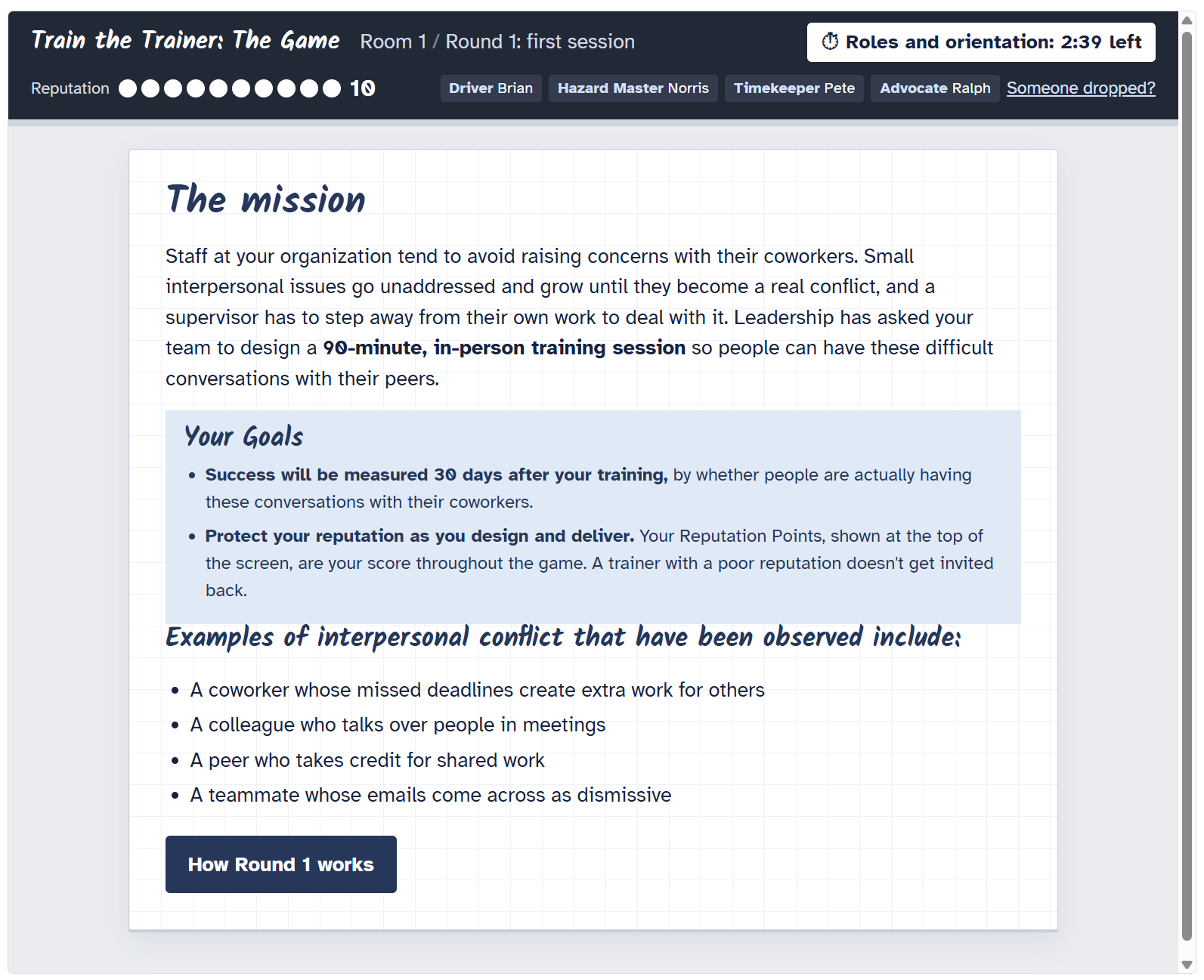
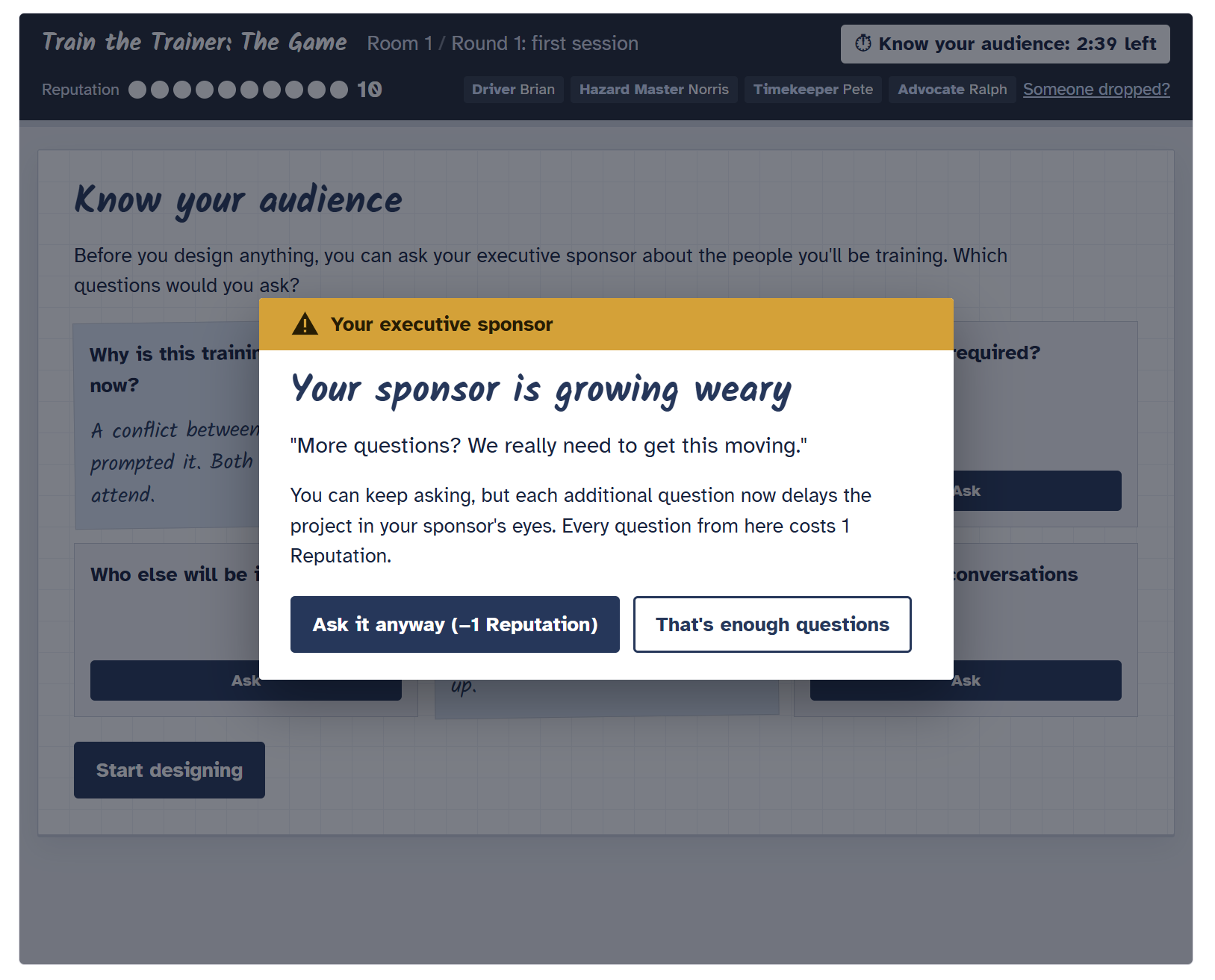
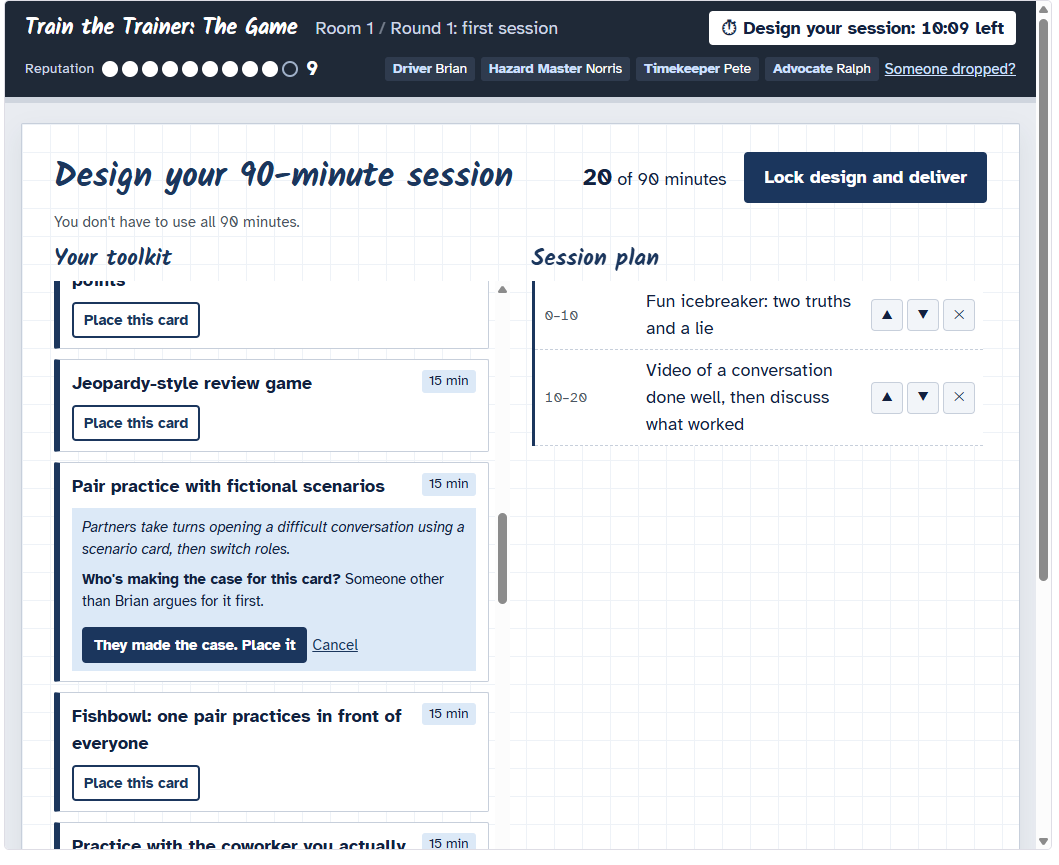
The virtual version was designed to be scaled for hundreds of players at any given time. Groups are put into small teams and work in breakout rooms to design a session, respond to challenges, review simulated outcomes, and revise their approach. This version was designed for experienced trainers, people new to the field of L&D, and subject matter experts who are asked to train people.

Click on the "Explore the team game" button below to actually experience the online version of this game.

Explore the team game

Original webinar version. Requires two participant names; best explored on desktop. Live cross-room results are unavailable here.

TALENT DEVELOPMENT / MENTORING

04 / SUCCESS PROFILES

From a training request to clearer career expectations

A request for better virtual training revealed a more important need: consistent feedback and clear expectations for advancement.

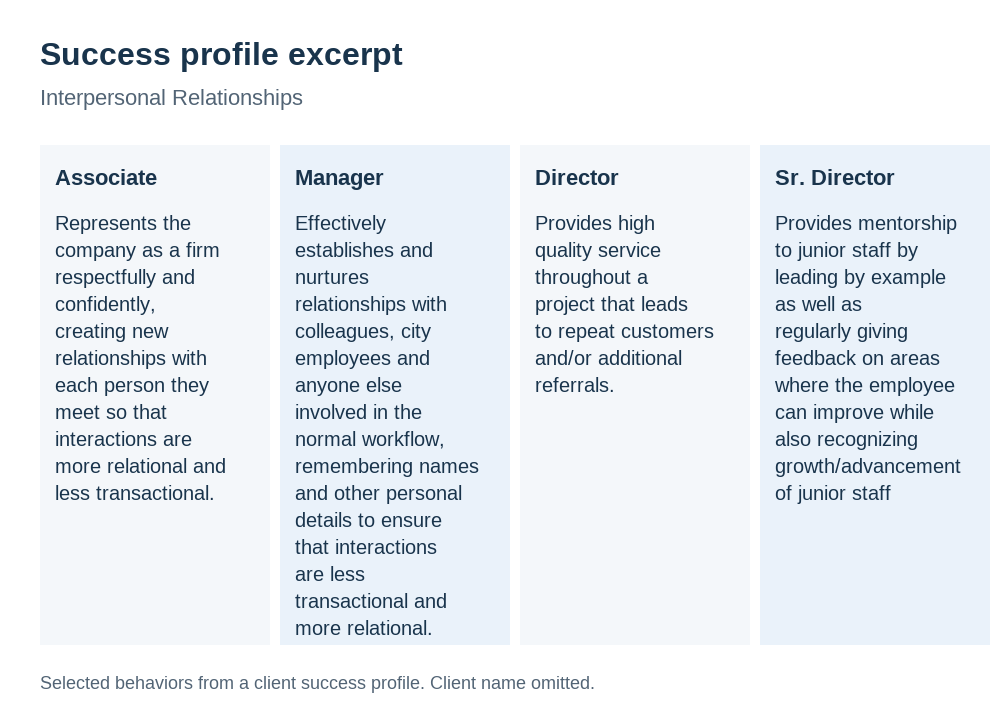
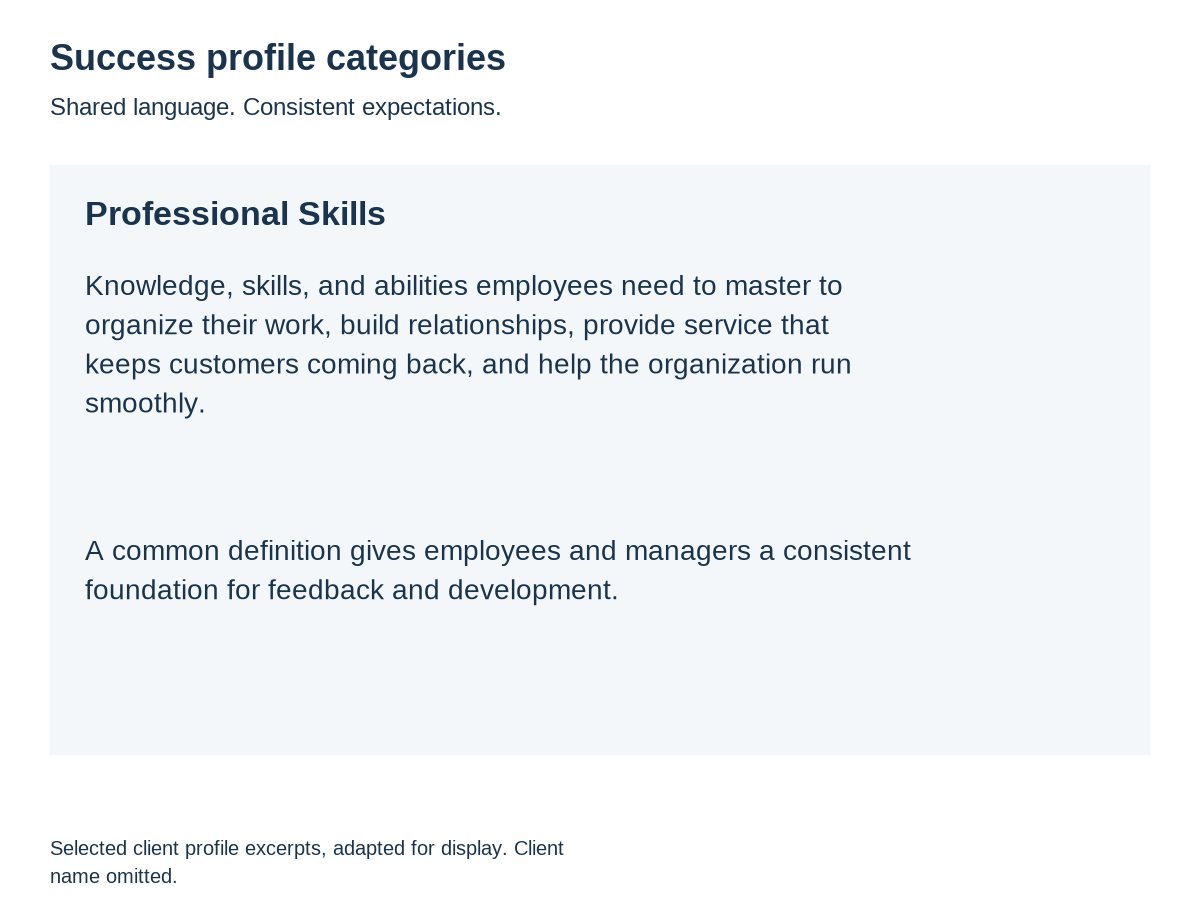
I developed behavioral success profiles with high-performing employees and trained senior staff to use them in mentoring and development conversations.

Read the case study

Diagnose before designing

Even though the original request from this project sponsor was for a training on how to more effectively design and deliver virtual training, I quickly learned that few employees actually trained other people. Discovery redirected the work toward helping managers explain successful performance and career progression.

Make expectations observable

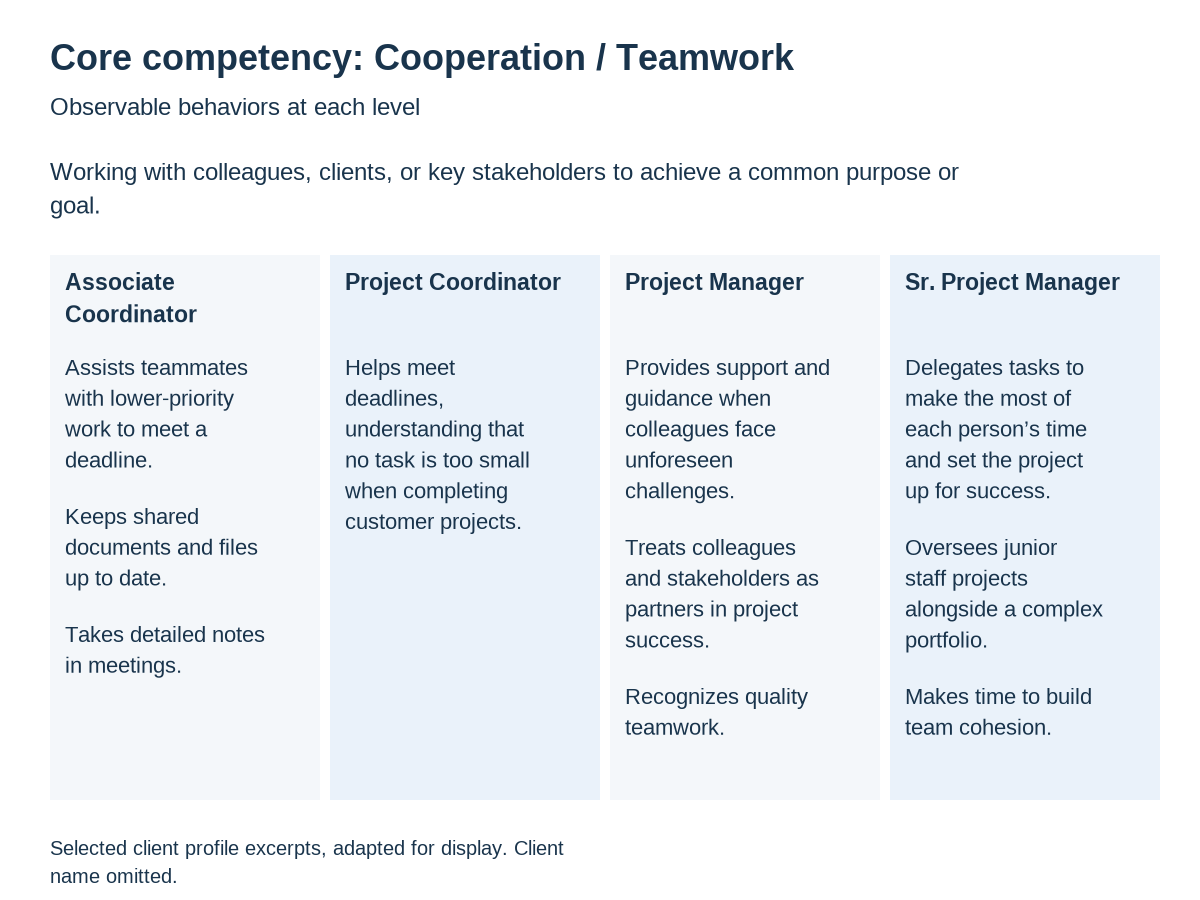
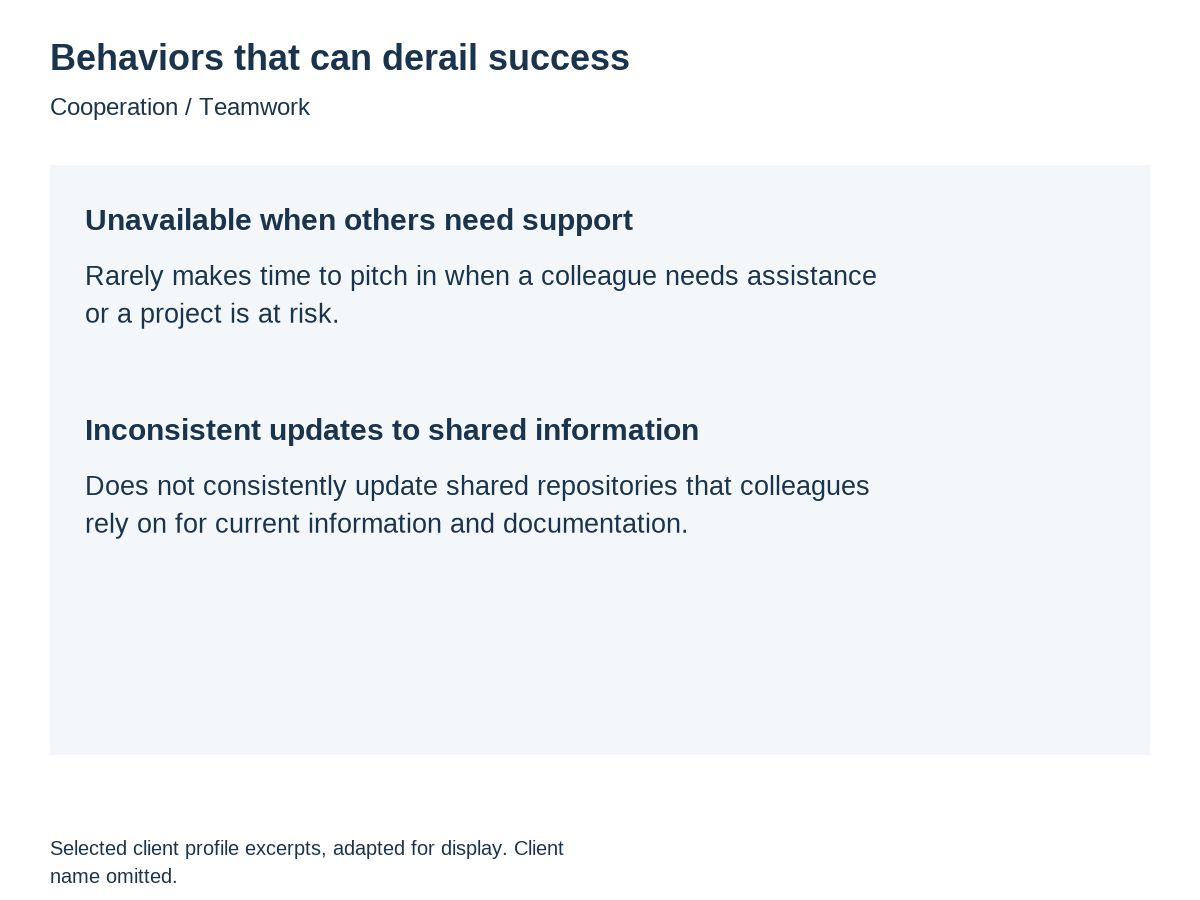
The profiles differentiated expectations by role and identified behaviors that could derail performance. Communication, problem solving, delegation, and developing others became specific topics for feedback.

Reported outcomes

Senior staff said the profiles reduced the cognitive load of coaching and gave them specific behaviors to reference. At least five employees moved into more senior positions between late 2020 and mid-2023 after rollout. The profiles were one part of their development; this does not establish sole causation.

LEARNING THAT TRAVELS BACK TO WORK

“I transformed my own conference session (which was the following morning!) from a lecture-heavy, PowerPoint-dependent training to a discussion-based, chart paper-using, idea-flying learning experience.”

Michelle PoundsProfessional Development Advisor, Arkansas State University

AI & L&D STRATEGY

Expand capacity with AI.
Keep people central.

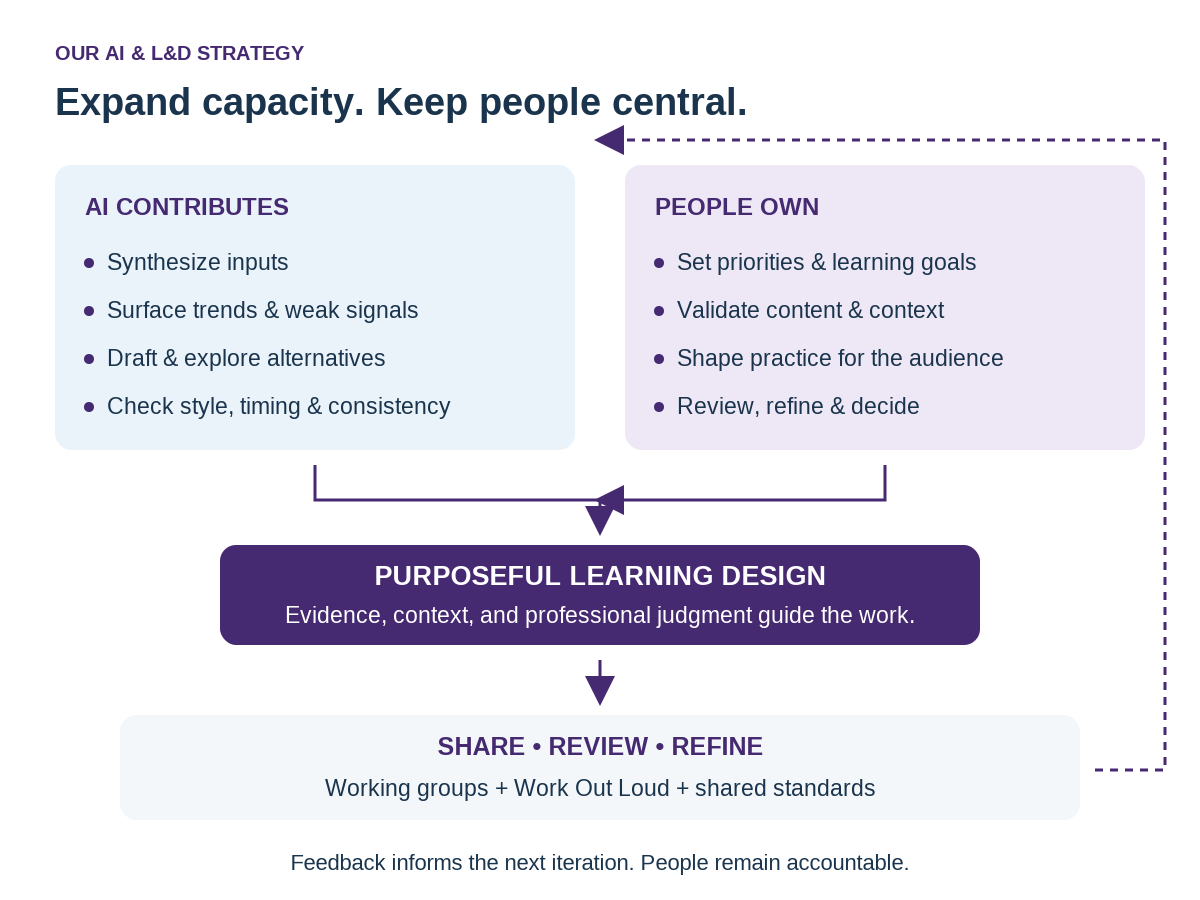
Integrating AI into our overall organizational strategy has been essential. I use AI as a thought partner, a junior instructional designer, and a tool for synthesis and consistency. At the same time, I make sure people bring the context, relationships, and judgment that make the work meaningful.

AI can surface trends, develop drafts, explore alternatives, and check materials against a style guide. An SME understands the content and its application in a specific project. I bring experience with audiences, activities, and facilitation to decide what will help people learn and apply it. I use rapid iteration to create more room for that work. My goal is to improve learning quality, consistency, and efficiency: clearer practice, shared standards across materials, and more time for expert review and thoughtful design.

SYNTHESIS / HUMAN JUDGMENT

NATIONAL CASA / GAL CURRICULUM REDESIGN

From extensive input to purposeful practice.

A complete reimagining of a 30-hour pre-service volunteer curriculum had to balance national consistency with relevance across 50 states. The curriculum was designed to serve a network of more than 1,000 state and local CASA/GAL programs.

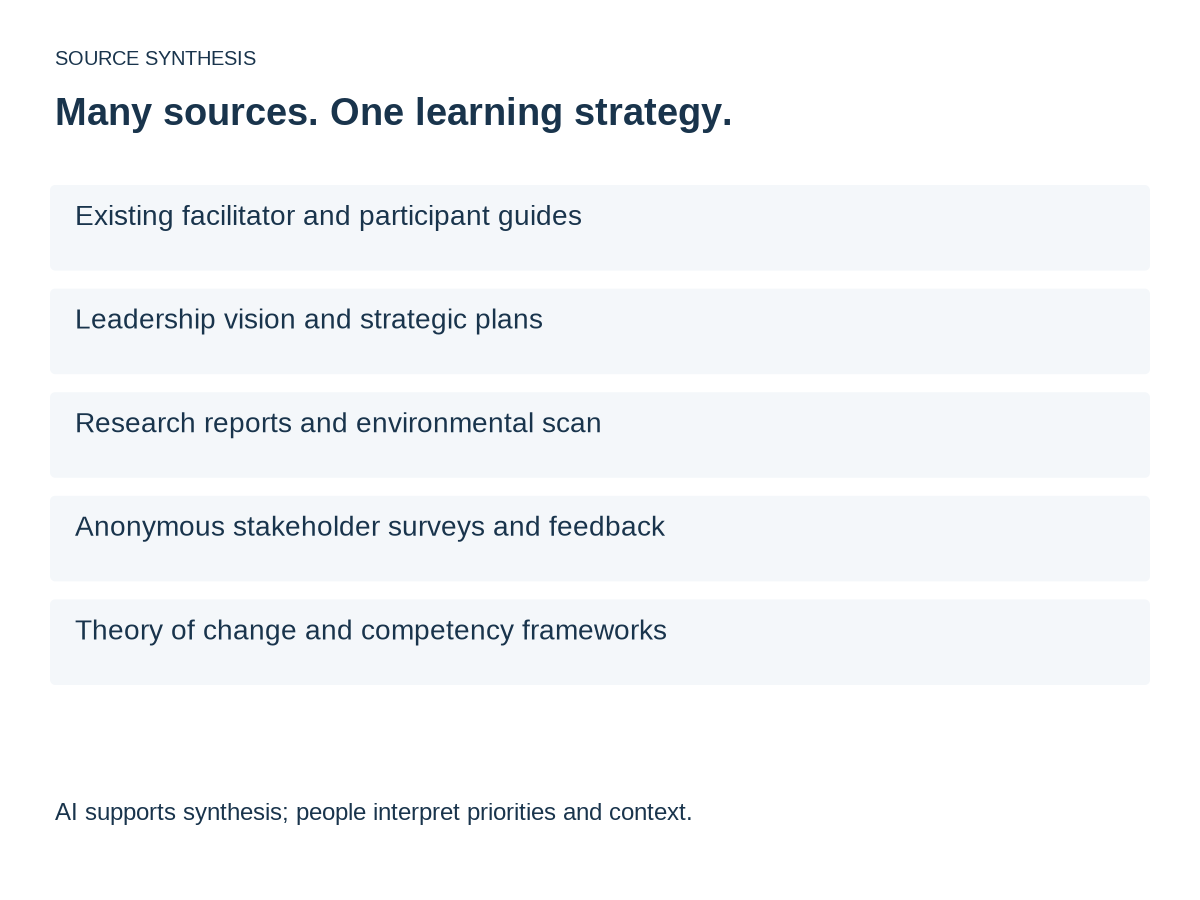
I brought together existing curricula, anonymous stakeholder feedback, a 100+ page environmental scan, leadership vision, and a theory of change. Stakeholders included internal staff, program staff and volunteers, family court judges, and outside subject matter experts.

Explore the approach and design decisions

Make sense of the inputs

I directed AI to synthesize recurring themes and flag weak signals that deserved attention. It helped compare stakeholder priorities and rank learning objectives, supporting decisions about what could fit within a 30-hour program.

Make successful performance observable

The previous competency framework used ratings from 1 to 3 without defining what they meant. I used AI to develop drafts of observable behaviors for competencies and rating levels, creating a more explicit basis for supervisors’ observations and feedback.

Direct the design

Using the prioritized objectives, competency framework, SME feedback, and environmental scan, AI helped generate curriculum drafts and identify where research informed the design. I reviewed every facilitator instruction line by line.

I noticed that the drafts consistently lacked “spark” activities that connect unfamiliar concepts to something learners can recognize. I directed AI to add those activities, use relatable metaphors where appropriate, and replace sections when a different approach would serve the audience better. In one section, I replaced a conventional case study with a choose-your-own-adventure activity.

Iterate with people

Internal and external working groups review the content and materials and provide feedback and direction. AI supports revisions by recalculating timing and flagging connections to later activities. Surveys were anonymous, and AI work took place in our organization’s private tool environment.

More capacity for design and review

Under 5 hours: Development of a 75+ page branching scenario, compared with my estimate of a week or longer working alone.

Less than a week: Drafts of the first five of ten curriculum chapters. My estimate for developing the entire curriculum without AI was a month or longer.

These figures describe drafting efficiency; the comparison times are my estimates.

Build capability across the team.

I share experiments through “Work Out Loud” sessions in team meetings and an ongoing Slack conversation, creating space for colleagues to share their own approaches and emerging best practices.

For the CASA project, my co-founder helped create a style guide where the client had not provided one. That shared reference supports consistent development and AI-assisted review of training materials, manuals, and scripts, with the aim of reducing avoidable edits and revisions.

Creative experimentation is another part of this approach. For Train-the-Trainer: The Game, I supplied the content, learning objectives, and refined rules while using Claude to explore structural changes and implement the virtual experience.

LEADERSHIP APPROACH

Grow the people.
Strengthen the system.

A case study on how I identify potential, define success, offer support, and provide room to grow through project ownership.

01

Identifying potential

I look for strengths, instincts, and curiosity that people may not yet recognize in themselves, then advocate for opportunities that help them grow.

02

Setting expectations

I make successful performance clear through observable behaviors, shared goals, and meaningful feedback so people know what they’re working toward.

03

Setting up for success

I provide learning, coaching, and supported practice, then give people room to own meaningful projects and apply their growing skills.

Developing a colleague into an L&D leader

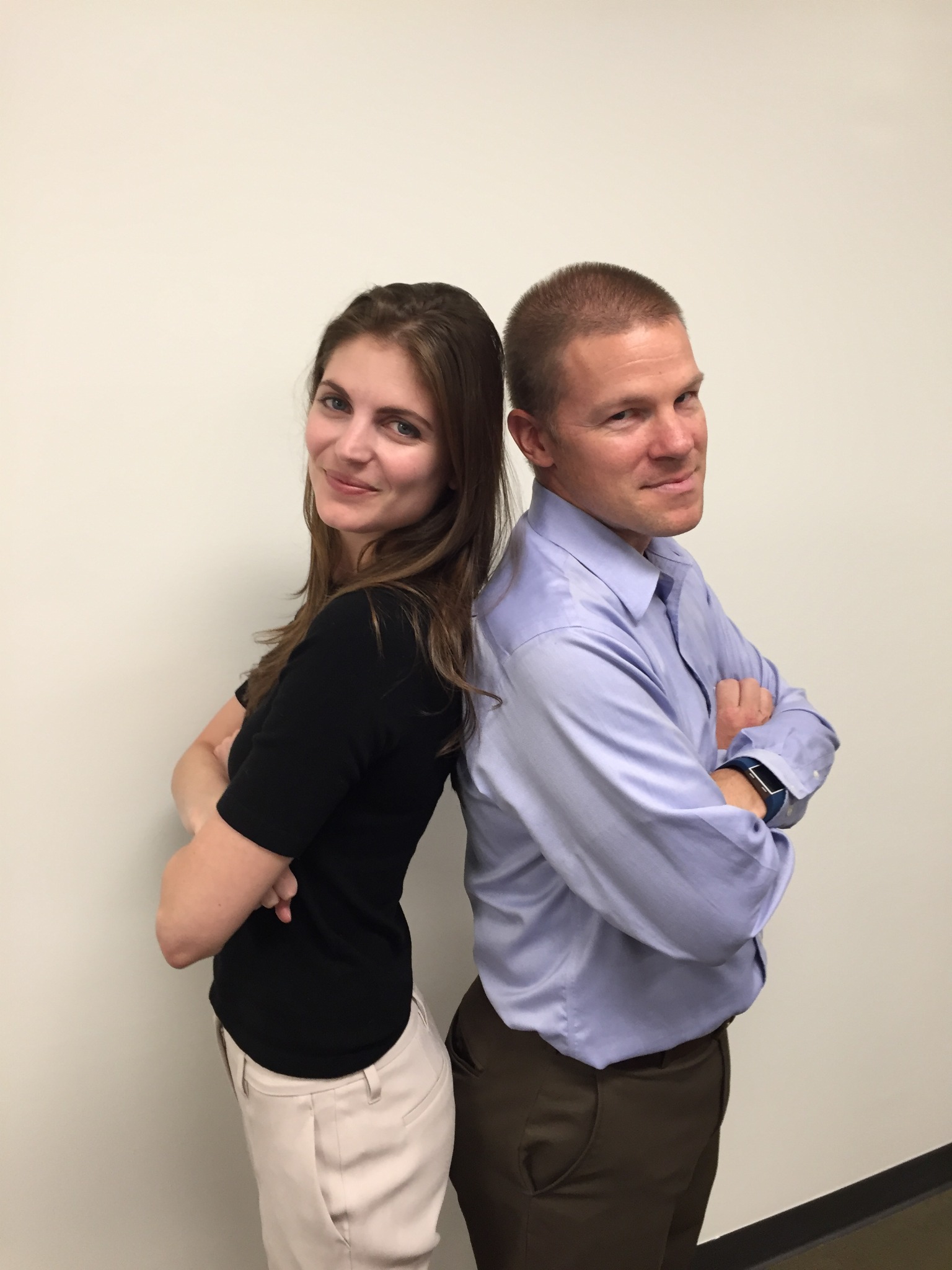
Brian Washburn and a colleague he coached at SightLife, standing back to back
At SightLife with a colleague I helped transition into L&D. Through coaching, formal learning, and project ownership, she expanded her capabilities and later became training director.

I recognized strong training instincts in a team leader outside L&D and advocated for a role that would let her develop them. Over approximately 18 months as her manager, I supported ATD membership, train-the-trainer participation, and co-facilitation.

She took on an organization-wide training audit and completed the ATD BEST Award application; SightLife subsequently received the award. She expanded her design, delivery, and Storyline skills and developed many activities for our onboarding redesign.

About a year after my departure, she became training director. Her progression reflects her accomplishments alongside the opportunities, sponsorship, and coaching I provided.

BOOKS & IDEAS

Training alone
is rarely enough.

My two ATD-published books offer frameworks and practical resources for purposeful learning design. Some learning professionals have used them when preparing for the Certified Professional in Talent Development (CPTD) exam.

What’s Your Formula? by Brian Washburn

A FRAMEWORK FOR INTENTIONAL DESIGN

What’s Your Formula?

Combine Learning Elements for Impactful Training

The periodic table makes the learning ecosystem visible: foundational practices, adaptable supports, tools, powerful methods that need care, and digital connections beyond formal training.

About the bookExplore the periodic table
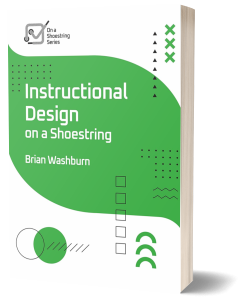
Instructional Design on a Shoestring by Brian Washburn

PRACTICAL LEARNING DESIGN

Instructional Design
on a Shoestring

A second book sharing my approach to designing learning with the resources available.

About the book

SPEAKING & FACILITATION

Engagement is
only the beginning.

Conversations about creating learning experiences that lead to practical application and better performance.

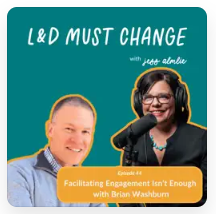
L&D Must Change episode artwork featuring Brian Washburn and Jess Almlie

PODCAST GUEST / DECEMBER 10, 2025

Facilitating Engagement Isn’t Enough

L&D Must Change · Episode 44 · With Jess Almlie · 1 hour

I join Jess Almlie to discuss why engagement alone is an incomplete measure of training success, how to help subject matter experts become effective facilitators, and how to design for application and future use.

We explore my four-step facilitation model: Anchor, Content, Application, and Future Use, alongside ways to navigate challenging moments and adapt facilitation for virtual and global audiences.

Listen on Apple Podcasts
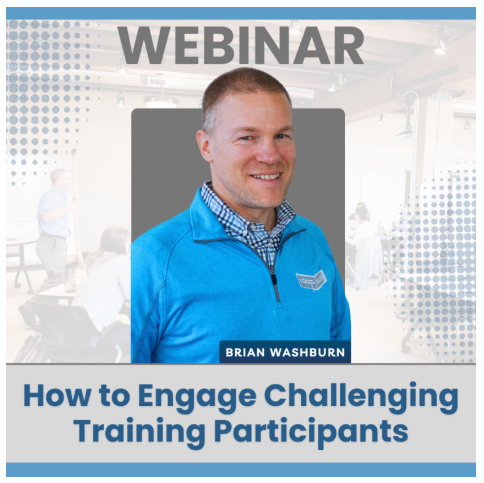
How to Engage Challenging Training Participants webinar featuring Brian Washburn

WEBINAR / FACILITATION IN PRACTICE

Navigating Challenging Participants

A choose-your-own-adventure activity gives trainers practice deciding how to respond to challenging participants. Explore how branching choices turn a facilitation challenge into an opportunity to practice judgment.

Featured activity begins at 33:02.

Watch the activity from 33:02Watch the full webinar
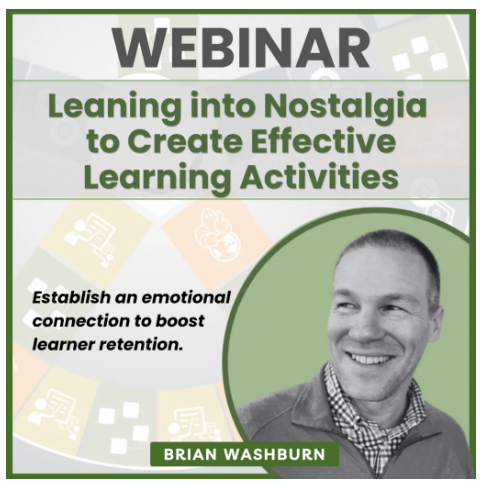
Leaning into Nostalgia to Create Effective Learning Activities webinar featuring Brian Washburn

WEBINAR / PURPOSEFUL LEARNING DESIGN

Connecting Nostalgia to Learning

Familiar experiences can offer a starting point for purposeful learning. In this webinar, I explore the connection between nostalgia and learning, and why that connection matters when designing training.

Featured discussion begins at 12:45.

Watch the discussion from 12:45Watch the full webinar

SELECTED ARTICLES

Ideas put
into practice.

Six selections from my published work in TD magazine, exploring purposeful play, facilitation, and learning that supports organizational goals.

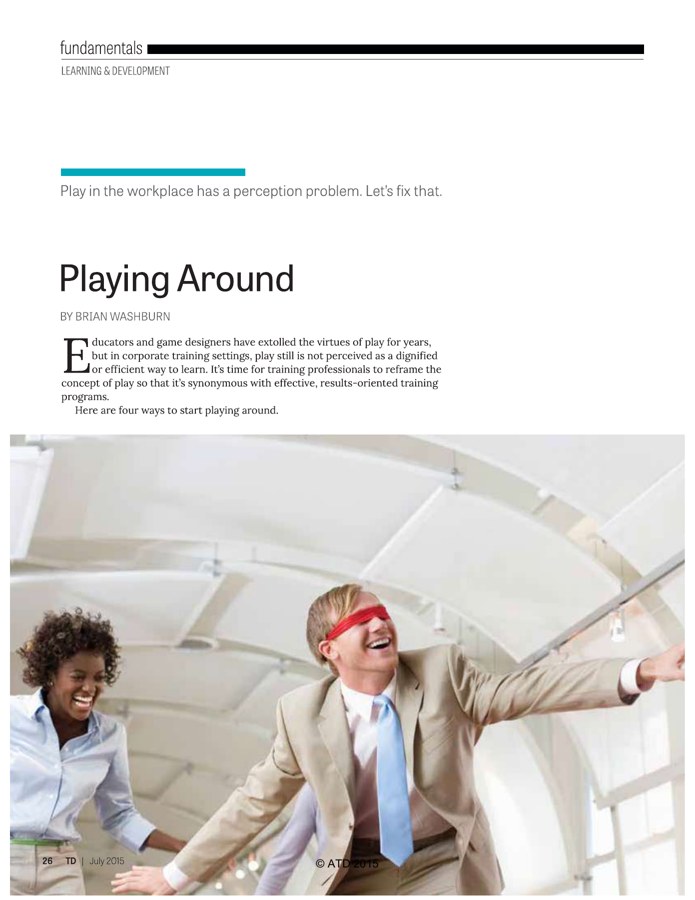
Opening page of Playing Around in TD magazine

TD MAGAZINE / JULY 2015

Playing Around

Practical ways to make play a purposeful part of effective workplace learning.

Read article (PDF)
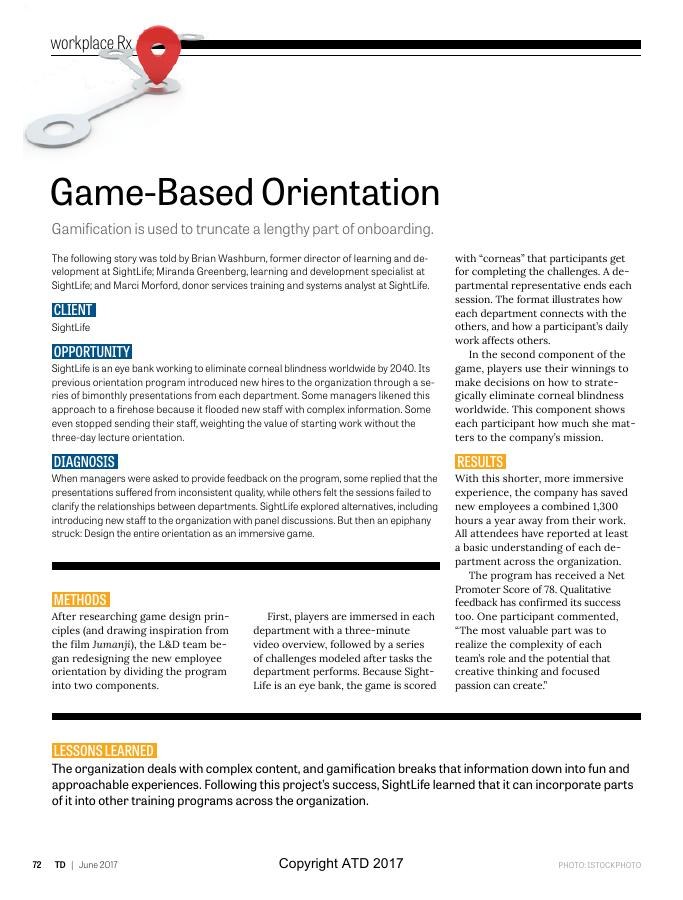
Opening page of Game-Based Orientation in TD magazine

TD MAGAZINE / JUNE 2017

Game-Based Orientation

The SightLife onboarding redesign connected departmental work to the mission and saved 1,300 employee hours annually.

Read article (PDF)
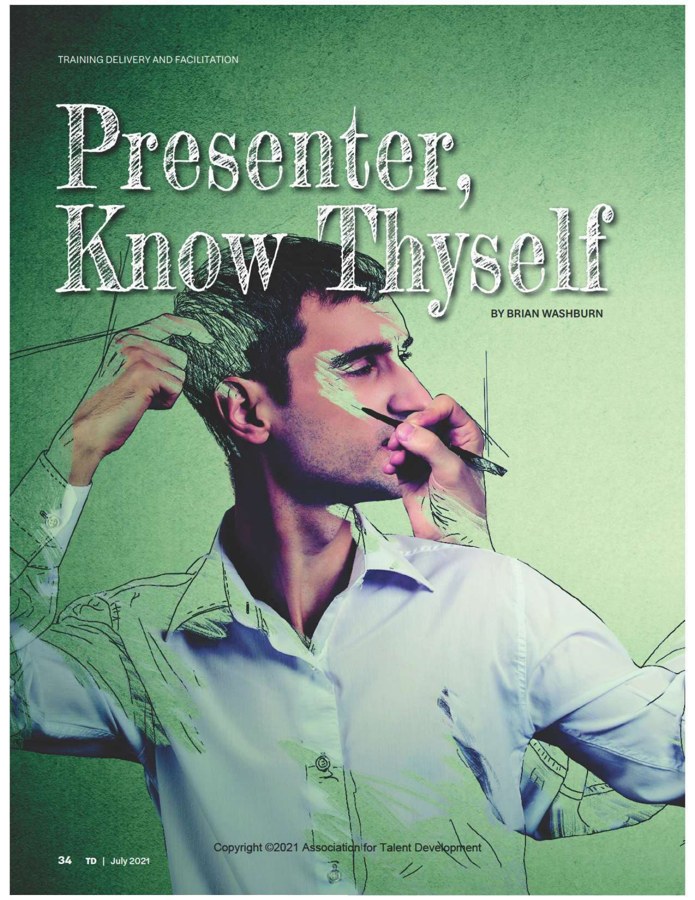
Opening page of Presenter, Know Thyself in TD magazine

TD MAGAZINE / JULY 2021

Presenter, Know Thyself

How understanding your presenter type can help you choose strategies to strengthen your facilitation practice.

Read article (PDF)
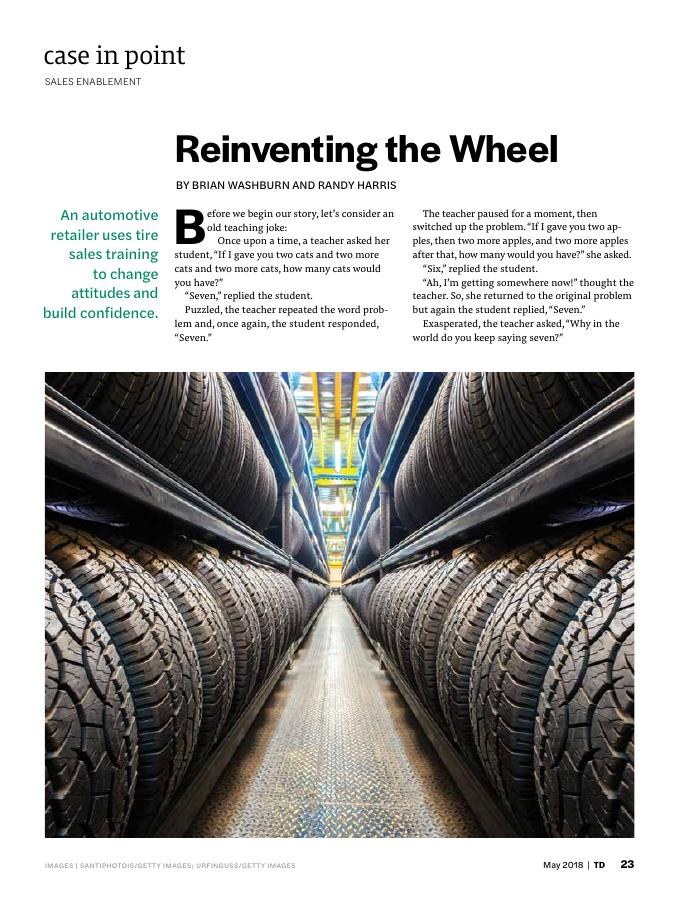
Opening page of Reinventing the Wheel in TD magazine

TD MAGAZINE / MAY 2018

Reinventing the Wheel

A blended learning and certification program addressed sales skepticism, built confidence, and supported a business growth strategy. Coauthored with Randy Harris.

Read article (PDF)
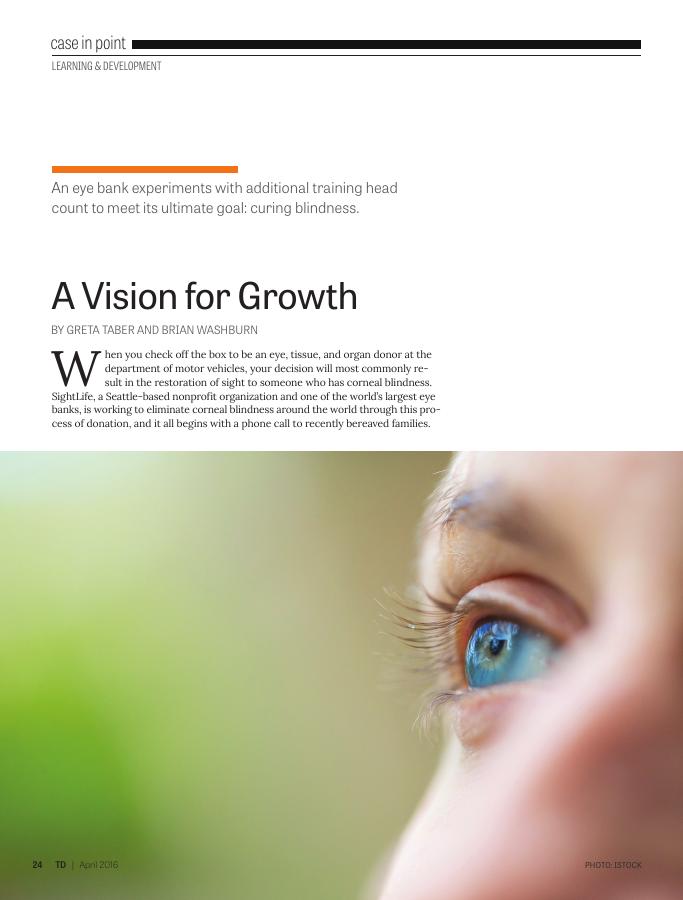
Opening page of A Vision for Growth in TD magazine

TD MAGAZINE / APRIL 2016

A Vision for Growth

How targeted investment in training capacity, focused onboarding, and mentoring reduced time to competence while maintaining performance standards. Coauthored with Greta Taber.

Read article (PDF)
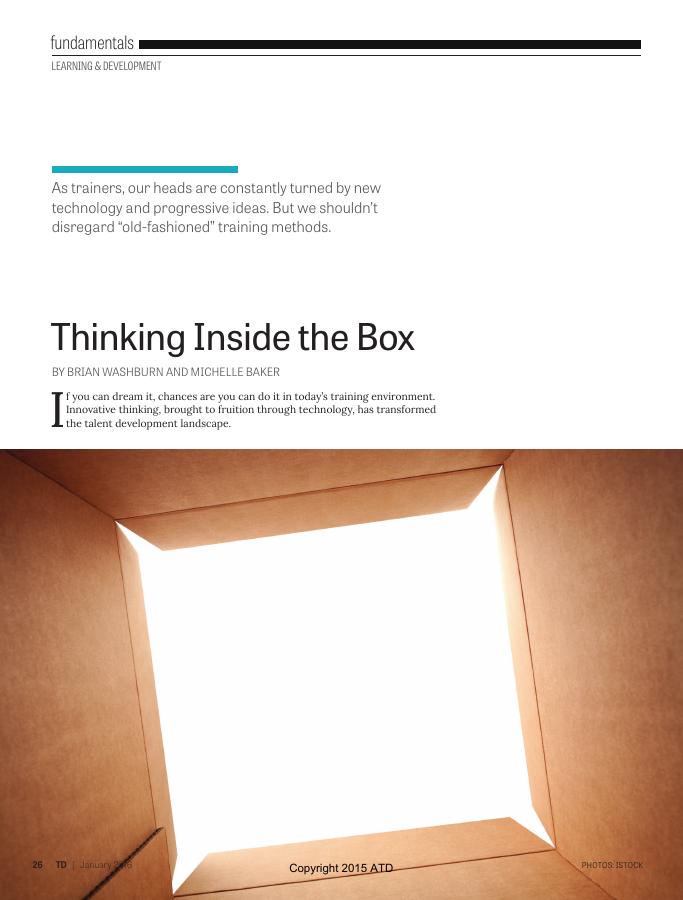
Opening page of Thinking Inside the Box in TD magazine

TD MAGAZINE / JANUARY 2016

Thinking Inside the Box

Why familiar training methods can be the right choice when guided by needs assessment and sound design. Coauthored with Michelle Baker.

Read article (PDF)
“The conversation shifted from ‘What do I need to cover?’ to ‘What do people need to be able to do, and how can I get them there?’”

Hillary WashburnLearning Experience Program Manager, Massachusetts Library System
On Endurance Learning’s Train-the-Trainer program

ABOUT BRIAN

Strategy with
hands-on follow-through.

I’m the co-founder and CEO of Endurance Learning, with previous leadership roles at SightLife and National CASA. My work spans learning strategy, facilitator development, organizational change, and performance-focused design.

I hold a master’s degree in Organizational Development from Antioch University Seattle. I bring a practitioner’s perspective to leading teams and an educator’s curiosity to solving problems.

View my LinkedIn profile

LET’S CONNECT

Looking for an L&D leader?

I’d welcome a conversation about your organization’s learning and development priorities.

Email Brian